


KS3 Biology — Multicellular and Unicellular Organisms — Free Worksheet
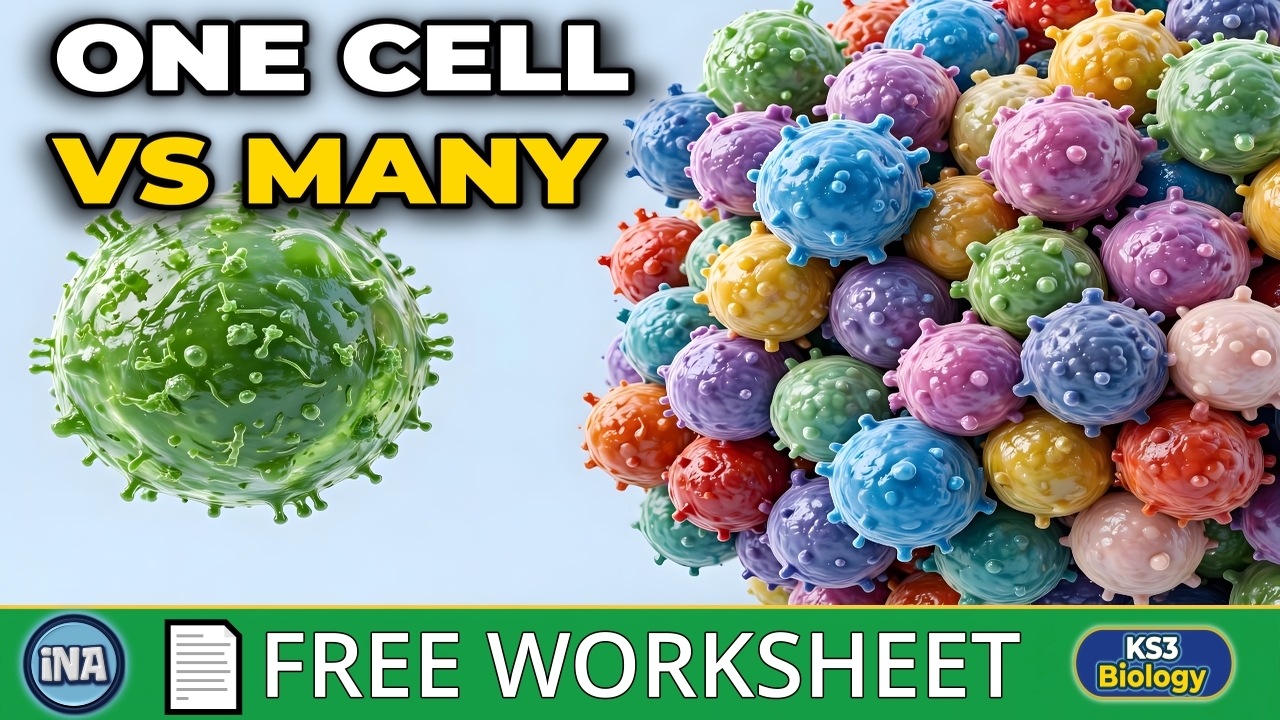
🔬 Find out why a single bacterium counts as a living organism with this free KS3 Biology worksheet on multicellular and unicellular organisms — no preparation required, just download and use. A unicellular organism is a living thing made of just one cell that carries out every life process by itself, while a multicellular organism is built from many different types of cells, each with its own job, and this taster resource introduces the basics for students aged 11–14.
📦 What's included:
3 questions, 13 marks:
Multiple choice — testing the definition of a unicellular organism
Fill-in-the-blank — using key vocabulary to describe the difference between unicellular and multicellular life
Short answer — correcting a common misconception about what "unicellular" actually means
Full answer key with marking guidance included.
🎬 Watch the free video lesson: https://www.youtube.com/watch?v=x1g3h5OR99U
👩🏫 Google Classroom ready — copy the link straight into your assignment. Print as many copies as your class needs.
🔓 This is a taster only. The full 100-mark worksheet goes deeper into how cells build up into tissues and organs, how organs work together in organ systems, and the specific adaptations — such as cell walls, flagella, and DNA storage — that let unicellular organisms like amoeba, yeast, and bacteria survive alone — available on its own, or as part of the Complete Lesson Pack with extension activities. Save £1 buying the pack (£3 + £3 = £6 separately, £5 together).
Price: Free